

Microscope Slides vs Cover Glass: What's the Difference?
Microscope slides and cover glass are used together in many laboratory preparations, but each has a distinct role. The slide provides a supporting surface for the specimen, while the cover glass forms a thin, transparent covering over it.
For laboratories, distributors and importers, understanding the difference helps clarify product specifications and avoid ordering the wrong format. Size, thickness, surface treatment and equipment compatibility all deserve attention when selecting these consumables.
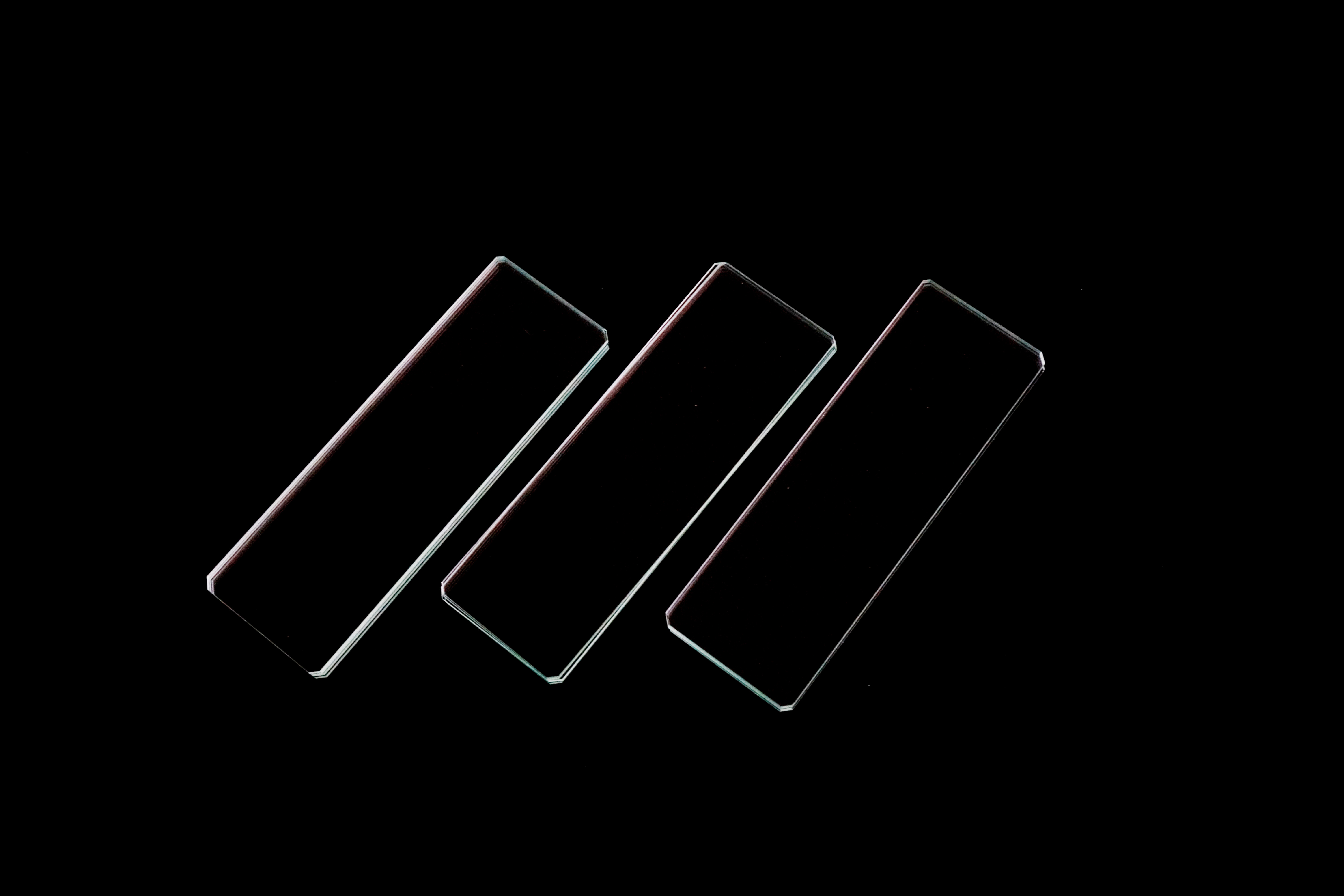

Quick Answer: Microscope Slide vs Cover Glass
A microscope slide supports the specimen. Cover glass, also called a coverslip or cover slip, covers the specimen in a conventional mounted preparation and forms part of the optical path.
Slides are relatively thick and rigid. Cover glass is much thinner and is available in square, rectangular and circular formats. The two products perform complementary functions and have different purchasing specifications.
Microscope Slides and Cover Glass Compared
Feature | Microscope Slide | Cover Glass |
|---|---|---|
Primary role | Supports the specimen and provides a platform for handling | Covers the specimen and provides an optical surface |
Position in a conventional preparation | Beneath the specimen | Over the specimen and mounting medium |
Common shape | Rectangular | Square, rectangular or circular |
Common dimensions | 25 × 75 mm, 26 × 76 mm or 25.4 × 76.2 mm | Selected to suit the specimen area and preparation format |
Thickness | Often approximately 1.0–1.2 mm, depending on the model | Much thinner; selected by the required thickness grade |
Identification area | May have a frosted or colored marking area | Usually has no dedicated marking area |
Surface options | Plain, charged or other adhesive treatments | Material and surface options depend on the application |
Key compatibility checks | Slide holders, racks, printers, staining systems and scanners | Microscope objectives, specimen coverage and coverslipping equipment |
These comparisons describe common slide-mounted preparations. Specialized microscopy systems may use different formats or arrangements.
What Is a Microscope Slide?
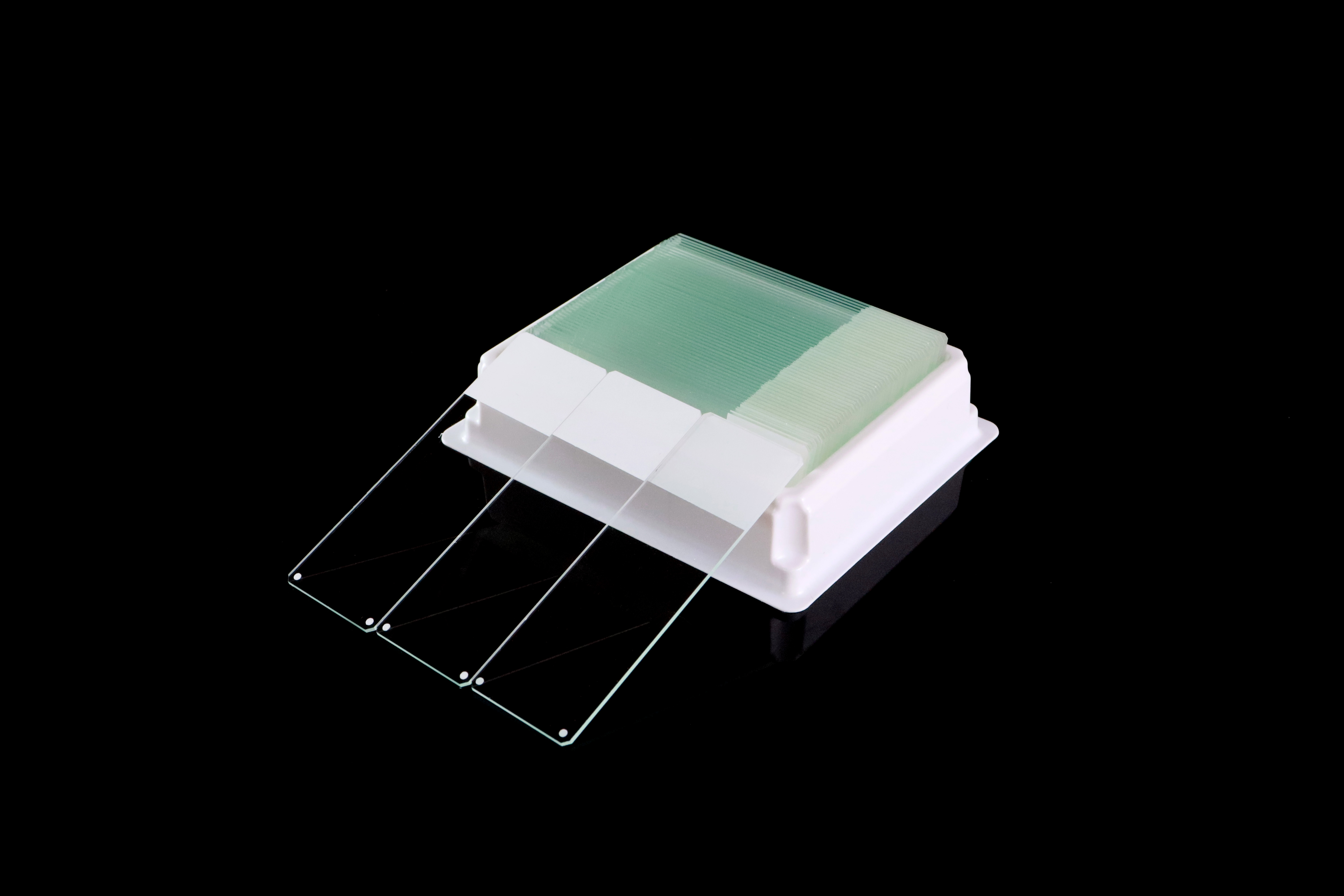
A microscope slide is a flat support used to hold a specimen during preparation, processing and microscopic examination. It is widely used in histology, pathology, cytology, research and education.
Common formats include 25 × 75 mm, 26 × 76 mm and 25.4 × 76.2 mm. The last format is the exact metric equivalent of 1 × 3 inches. Buyers should confirm the actual dimensions and accepted limits required by their equipment.
Slide selection also depends on identification and adhesion requirements:
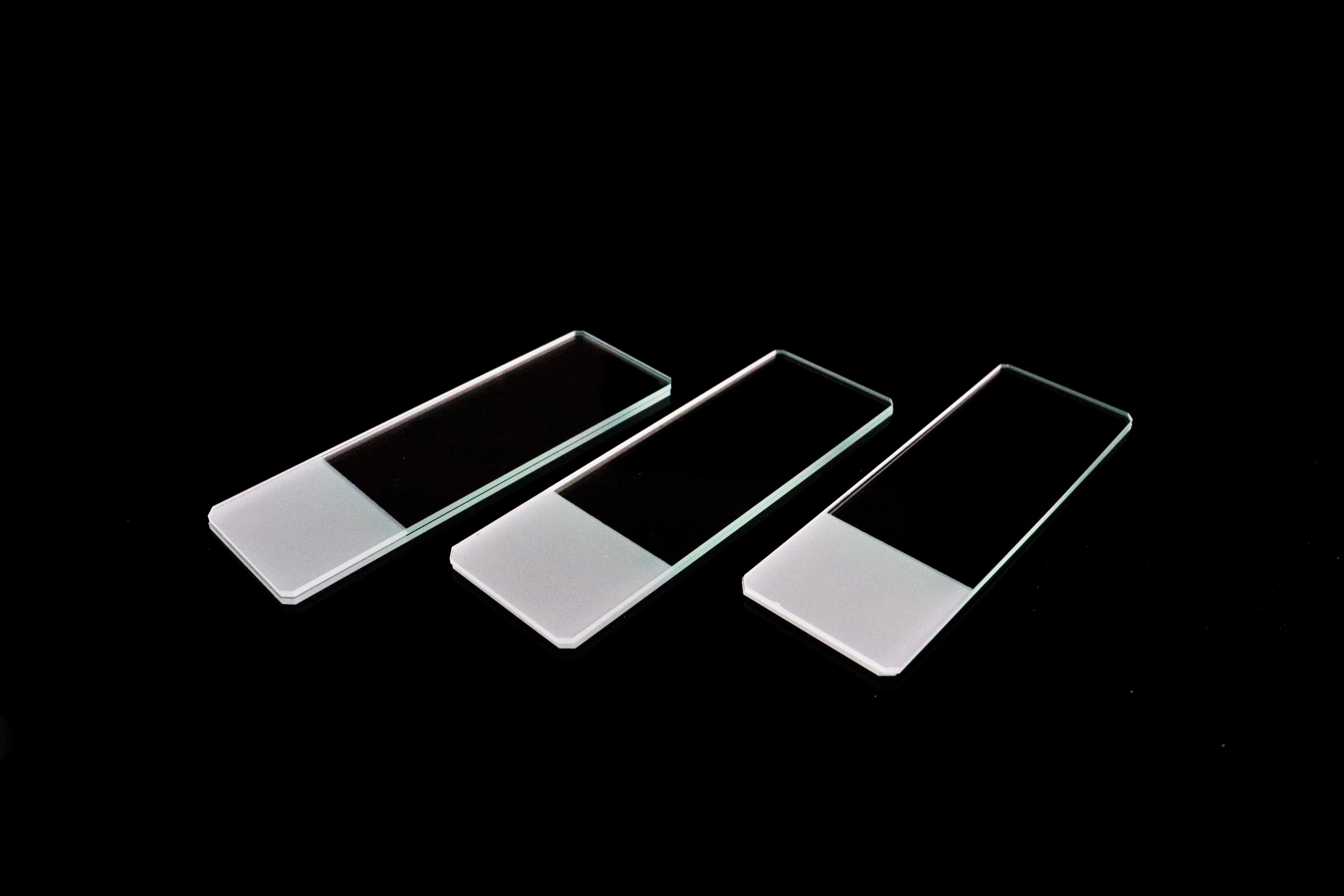
Plain microscope slides: Provide a glass surface for applications that do not require a dedicated marking area or adhesion treatment.
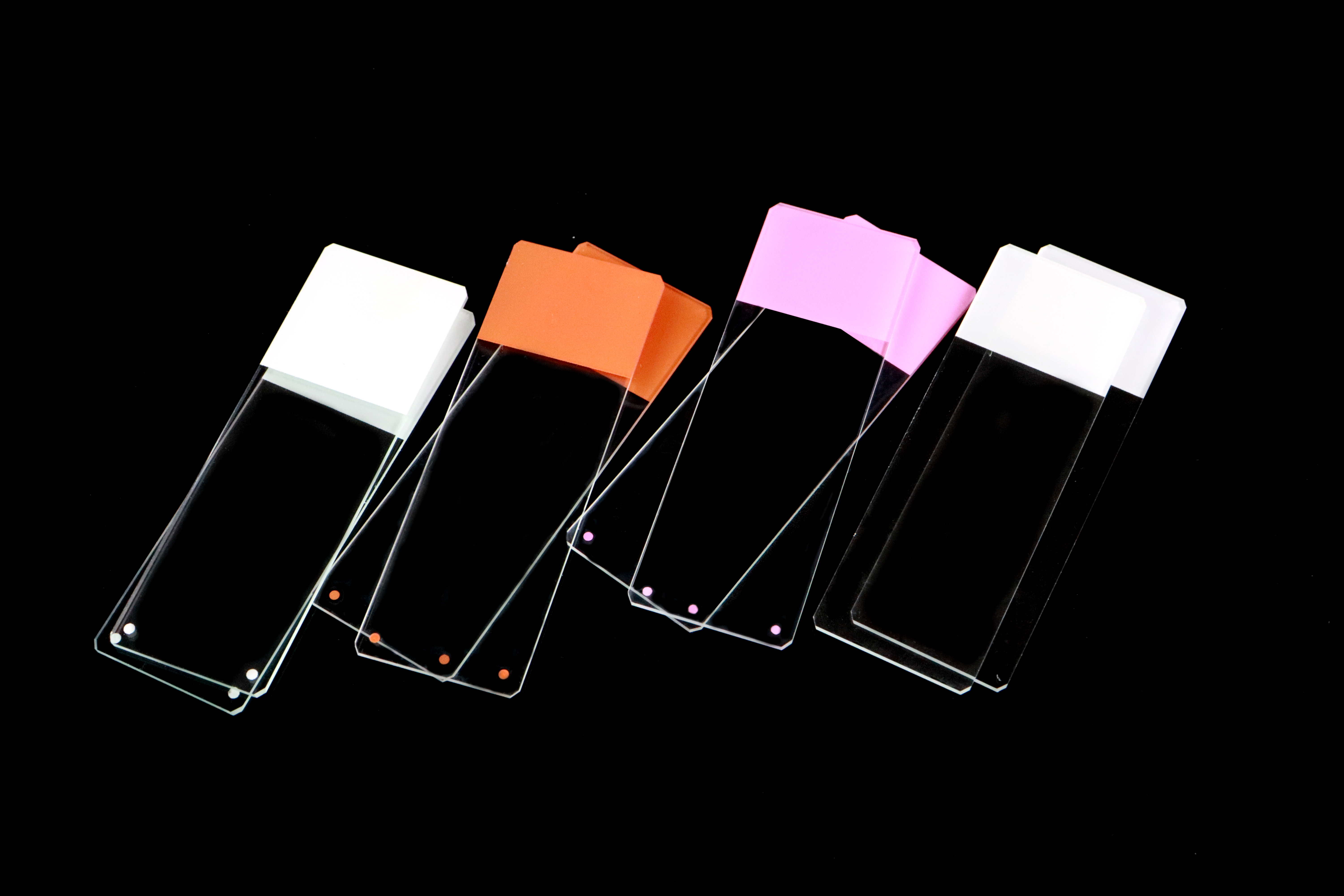
Frosted microscope slides: Include an area for specimen identification.
Color frosted microscope slides: Add a colored marking area for identification and laboratory organization.
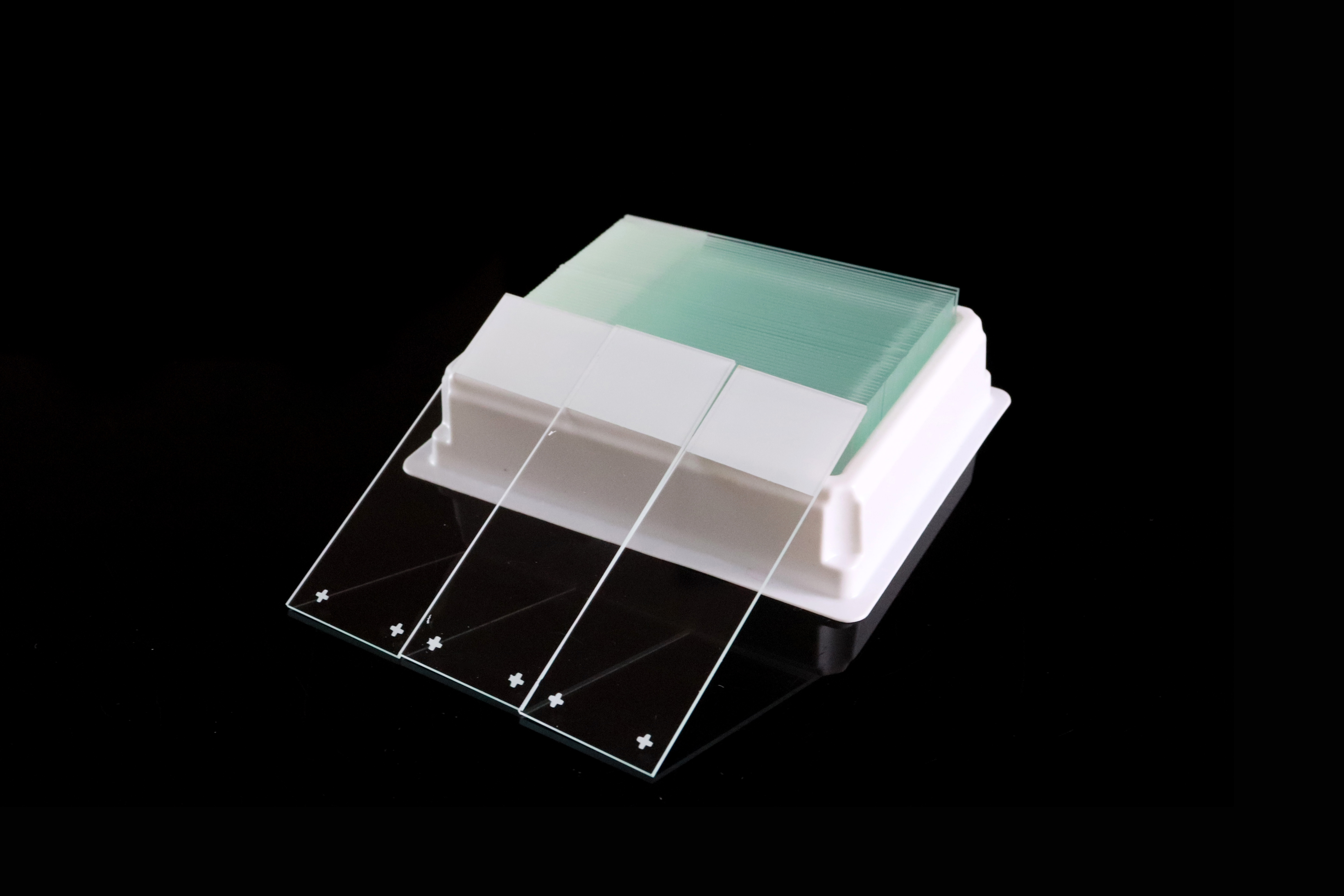
Positively charged slides and other adhesive slides: Have surface treatments designed to improve tissue adhesion in relevant laboratory workflows.
A marking area and an adhesion treatment serve different purposes. A slide may combine both features, and the selected model should be evaluated for the intended application.
What Is Cover Glass Used For?
Cover glass is a thin, transparent piece of glass used over the specimen in many mounted preparations.
Depending on the preparation, it helps:
Cover and protect the mounted specimen
Maintain a stable preparation
Provide a smooth optical surface
Contain mounting medium over the area of interest
Support handling and storage of the finished preparation
The cover glass also needs to suit the optical system. Its thickness and optical properties can influence image quality when the objective is designed to view through it.
In specialized applications, cover glass may be used in chamber systems or other arrangements. Its role is determined by the laboratory method and equipment.
How Are Slides and Cover Glass Used Together?
In a conventional mounted preparation, the specimen is supported on the microscope slide. Mounting medium occupies the space around the specimen beneath the cover glass, which forms the upper surface of the preparation.
The slide provides mechanical support for handling, labeling and processing. The cover glass encloses the specimen area and provides the optical interface required by the selected imaging arrangement.
The appropriate mounting medium, preparation method and use of a coverslip should follow the laboratory's established procedure.
Why Does Cover Glass Thickness Matter?
Cover glass thickness is an optical specification.
Many microscope objectives are designed for a nominal cover glass thickness of 0.17 mm. Using a thickness that differs from the objective's requirements can affect image quality, particularly in more demanding imaging applications.
No. 1.5 cover glass is commonly specified within a 0.16–0.19 mm range. The grade name does not mean that every piece is exactly 0.17 mm thick.
When ordering, confirm the supplier's thickness range and tolerance, then compare them with the objective and imaging requirements. If a tighter thickness specification is required, state it explicitly.
The most suitable coverslip is the one that matches the optical system and application.
Common Cover Glass Shapes and Sizes
Choose cover glass to cover the required specimen area while fitting the slide and any relevant equipment.
Shape | Common Dimensions or Specification | What to Confirm |
|---|---|---|
18 × 18, 20 × 20, 22 × 22 and 24 × 24 mm | Specimen coverage, thickness and fit | |
24 × 32, 24 × 40, 24 × 50 and 24 × 60 mm | Required coverage and coverslipper specifications, where applicable | |
Specified by diameter and thickness | Fit with the intended chamber, holder or preparation |
A cover glass that fits the slide may still be unsuitable for an automatic coverslipper. Confirm the equipment's permitted dimensions, thickness and product requirements, and evaluate samples before approval.
Are Slides and Cover Glass Made from the Same Material?
Both are commonly made from glass, but their material and optical specifications can differ.
Confirm the glass composition or stated grade, thickness, clarity and relevant surface requirements for each product. A material description alone does not establish compatibility with a particular laboratory method.
For specialized imaging or surface treatments, request the relevant product information and evaluate samples under the intended conditions.
Does Every Microscope Slide Need a Cover Glass?
Some microscopy applications use uncovered slides or a different specimen arrangement.
Whether a cover glass is required depends on the specimen, laboratory procedure, microscope objective and imaging method. Many mounted histology and other prepared-slide workflows use coverslips, while other methods have different requirements.
The decision should follow the applicable laboratory protocol and equipment instructions.
How to Choose the Right Slide and Cover Glass Combination
Begin with the complete workflow: specimen preparation, processing, identification, coverslipping, imaging and storage.
For the microscope slide, confirm:
Length, width, thickness and accepted tolerances
Glass material and surface quality
Edge and corner finish
Marking area and identification method
Any required adhesion treatment
Fit with the relevant laboratory equipment
For the cover glass, confirm:
Shape and dimensions
Thickness grade, range and tolerance
Material and optical requirements
Specimen coverage
Compatibility with mounting and coverslipping equipment
Packaging and storage requirements
Product samples should be evaluated as a combination where both items are used together. A suitable slide and a suitable coverslip still need to work within the same preparation and imaging system.
What Should Bulk Buyers Check Before Ordering?
Sample evaluation and a written specification help establish a clear purchasing reference.
Check | What Buyers Should Evaluate |
|---|---|
Dimensions and thickness | Agreement with the order and equipment requirements |
Surface condition | Cleanliness, scratches, stains and visible particles |
Glass and edge quality | Clarity, chips, cracks and finishing defects |
Functional performance | Relevant adhesion, marking, coverslipping and imaging results |
Packaging | Protection, correct quantities and product identification |
Batch consistency | Comparison with the approved specification and reference samples |
Because cover glass is thin and delicate, review its packaging and ease of separation during sample evaluation. For both products, confirm the packing format, labels and lot identification before approving bulk supply.
Microscope Slides and Cover Glass from Chuangxin Medlab
Yancheng Chuangxin Medlab Co., Ltd. manufactures and supplies microscope slides and microscope cover glass for laboratories, distributors, importers and OEM customers.
Our slide range includes plain, frosted, color frosted, positively charged and adhesive options. Cover glass is available in square, rectangular and circular formats, with material options including soda-lime, borosilicate and super white products. Dedicated cover glass for counting chambers is also available.
For bulk and private-label projects, specifications, sample evaluation, packaging, labels and repeat-order requirements can be discussed before production.
Contact Chuangxin Medlab with your application, required sizes, thickness specifications and quantities to discuss samples and a quotation.
Frequently Asked Questions
Is cover glass the same as a coverslip?
Yes. “Cover glass,” “cover slip” and “coverslip” commonly refer to the thin glass used to cover a specimen in a mounted preparation.
Can a microscope slide be used as a coverslip?
A conventional microscope slide is much thicker and has different dimensions and functions. Use the cover glass specified for the preparation and optical system.
Is No. 1.5 cover glass exactly 0.17 mm thick?
No. No. 1.5 is commonly supplied within a thickness range such as 0.16–0.19 mm. Confirm the supplier's specification and any tighter tolerance needed by the application.
Do charged slides replace the need for cover glass?
Charged surfaces are designed to improve tissue adhesion. Cover glass performs a separate covering and optical role. Whether it is required depends on the laboratory procedure and imaging system.
What information should buyers provide when requesting a quotation?
Specify the slide type, dimensions, thickness, edge finish and surface treatment, together with the cover glass shape, size and thickness grade. Include quantities, packaging requirements and any equipment compatibility needs.