






Plain and frosted microscope slides are two of the most commonly used types of glass slides in laboratories. Although they share similar dimensions and basic functions, the main difference is the presence of a frosted marking area for specimen identification.
Understanding the difference between plain and frosted microscope slides can help laboratories, distributors, and medical supply buyers select the right product for different applications.
Quick Answer
Plain microscope slides have a smooth glass surface without a dedicated marking area and are suitable for routine microscopy, education, research, and general laboratory applications.
Frosted microscope slides feature a frosted area, usually at one end of the slide, where specimen information can be written or marked.
The better choice depends primarily on whether reliable specimen identification is required.
What Are Plain Microscope Slides?
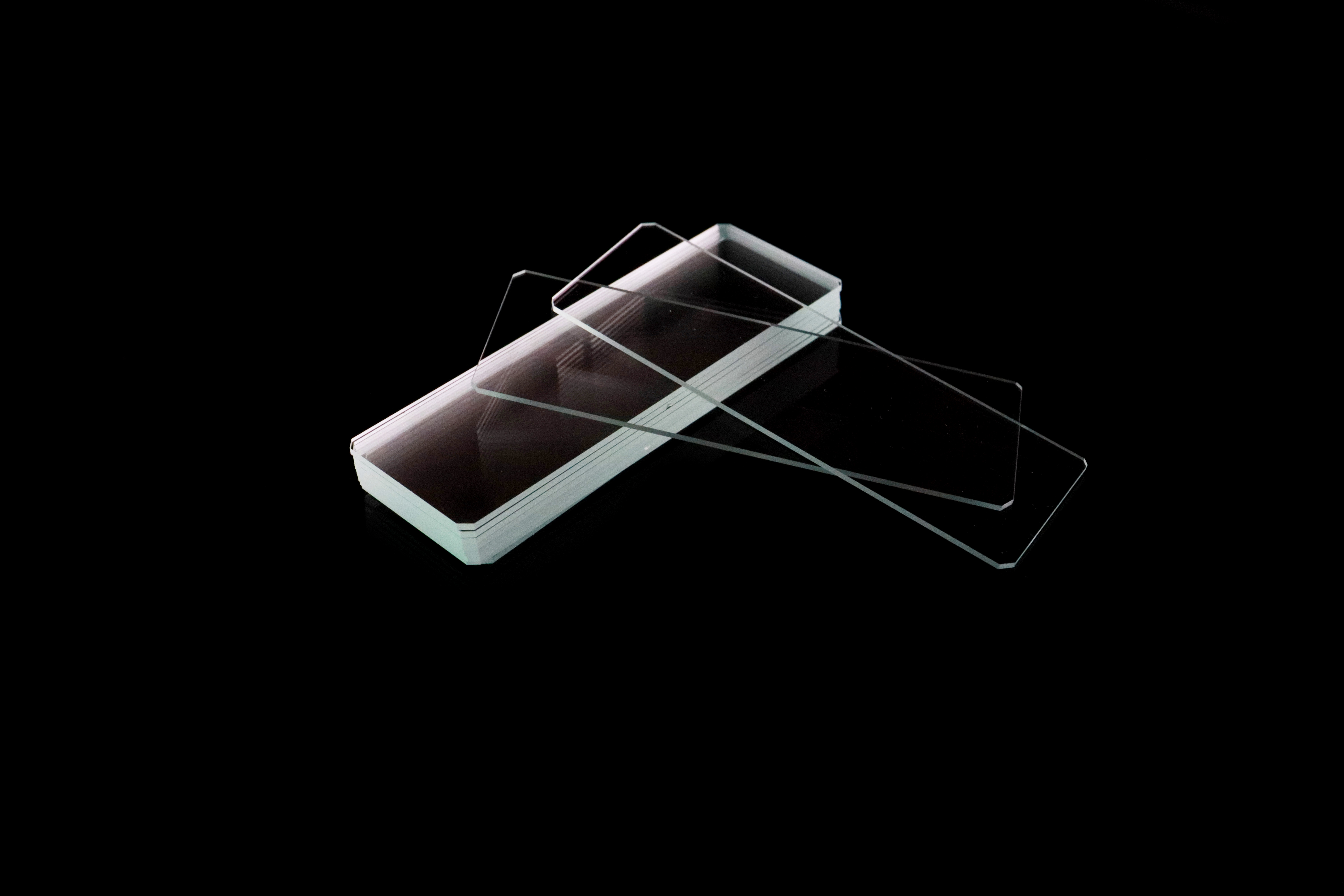
Plain microscope slides are standard glass slides with a smooth surface and no dedicated frosted marking area.
They are widely used for:
Routine microscopy
Educational laboratories
Biological research
General specimen preparation
Laboratory demonstrations
Plain slides are a practical option when a dedicated identification area is not required.
Depending on the specification, they may be manufactured from soda lime glass or higher-clarity glass and supplied with cut or ground edges.

What Are Frosted Microscope Slides?
Frosted microscope slides include a specially processed marking area, typically located at one end of the slide.
The frosted surface makes it easier to add specimen identification information using suitable laboratory marking methods.
They are commonly used in:
Histology
Pathology
Cytology
Clinical laboratories
Research laboratories
Specimen archiving
Frosted slides can be available with a single frosted end, double frosted surfaces, or color frosted marking areas, depending on the product design.
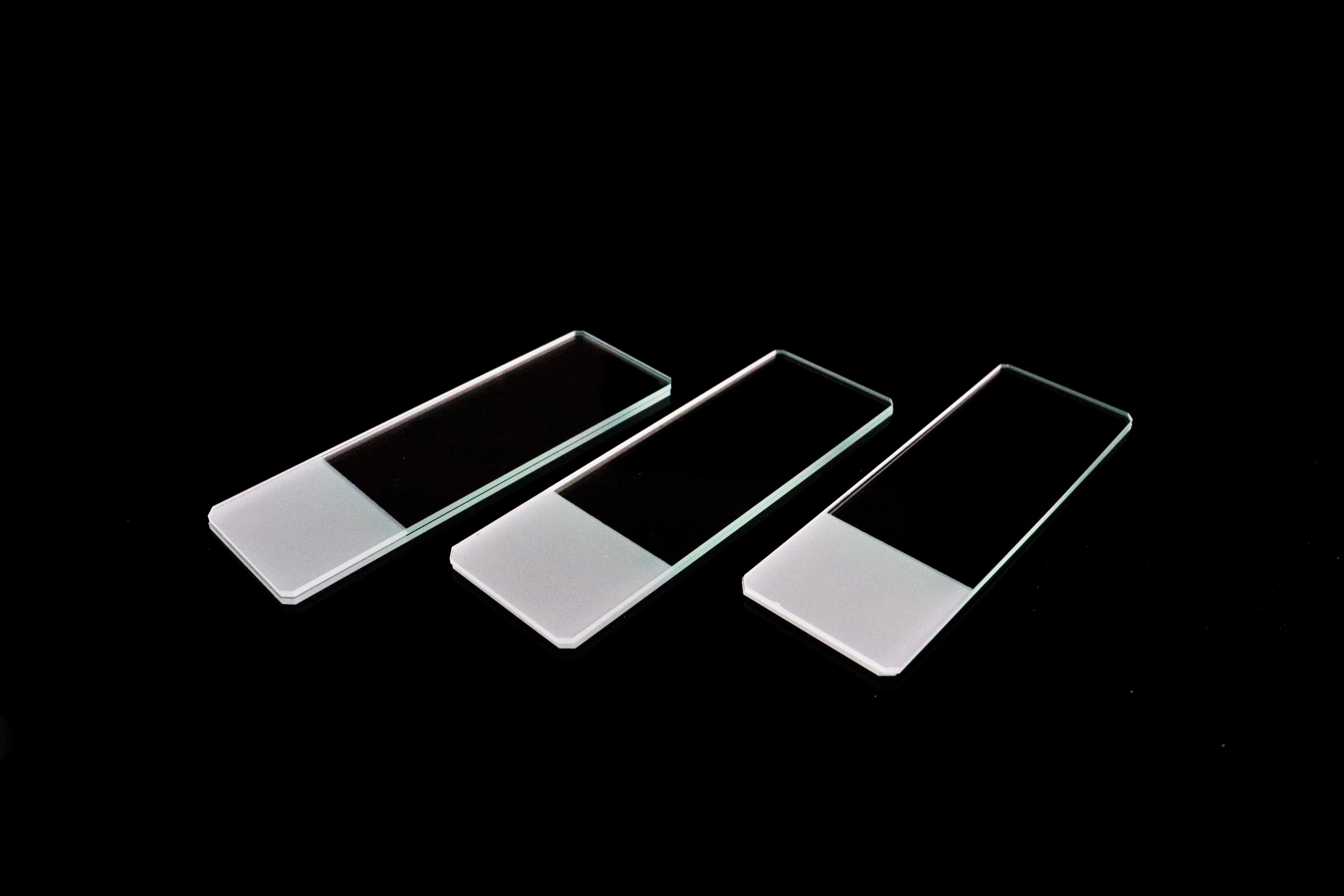
Plain vs Frosted Microscope Slides: Key Differences
Feature | Plain Microscope Slides | Frosted Microscope Slides |
|---|---|---|
Surface | Smooth glass | Smooth glass with frosted area |
Marking Area | No dedicated area | Yes |
Identification | More limited | Easier specimen labeling |
Routine Microscopy | Suitable | Suitable |
Education | Commonly used | Can be used |
Histology | Application-dependent | Commonly preferred |
Pathology | Application-dependent | Commonly used |
Specimen Tracking | Basic | More convenient |
Edge Options | Cut or ground | Cut or ground |
Cost | Usually more economical | May cost slightly more |
The key difference is therefore not the basic function of the glass slide, but the ability to identify and manage specimens more conveniently.
Why Use Plain Microscope Slides?
Plain slides are useful when simplicity and cost efficiency are important.
For routine microscopy or educational applications where slides are prepared for short-term observation, a dedicated frosted area may not be necessary.
Advantages can include:
Simple design
Broad laboratory applications
Easy specimen observation
Multiple size options
Cut or ground edge options
Cost-effective for high-volume routine use
For distributors, plain microscope slides are also a common core product because they serve a broad range of laboratory and educational customers.

Why Use Frosted Microscope Slides?
The main advantage of frosted microscope slides is specimen identification.
In pathology, histology, cytology, and other laboratories processing many specimens, accurate identification is an important part of laboratory workflow.
The frosted area provides a dedicated location for information such as:
Sample number
Patient or specimen code
Date
Laboratory reference
Staining information
Other identification data
This can make slide organization, tracking, and storage more convenient.
Single Frosted vs Double Frosted Slides
Frosted microscope slides can also have different configurations.
Single Frosted Slides typically provide a marking area on one surface at one end of the slide.
Double Frosted Slides provide frosted marking surfaces designed for additional identification flexibility.
The appropriate option depends on laboratory workflow and customer preference.

What About Color Frosted Microscope Slides?
Color frosted microscope slides add another identification option.
Different colors can help laboratories organize specimens according to departments, staining procedures, sample categories, or internal workflow systems.
For distributors, offering multiple frosted colors can also help serve pathology and histology customers with more specialized requirements.

Plain vs Frosted Slides for Histology
For histology applications, specimen identification is often important because laboratories may process large numbers of tissue sections.
For this reason, frosted slides are frequently selected when clear marking and traceability are required.
However, buyers should remember that frosting and tissue adhesion are different features.
A frosted area is primarily designed for identification. If stronger tissue adhesion is required, laboratories may need positive charged or adhesive microscope slides rather than choosing a slide simply because it is frosted.
This distinction is important when selecting slides for pathology and histology.
How to Choose Between Plain and Frosted Microscope Slides
Consider these questions:
Do you need a dedicated marking area?
If yes, choose frosted slides.
Are the slides mainly for routine teaching or general microscopy?
Plain slides may be sufficient.
Will large numbers of specimens need to be identified and stored?
Frosted slides may provide better workflow convenience.
Is tissue adhesion important?
Consider positive charged or adhesive slides rather than relying on frosting alone.
Are you purchasing for distribution?
Consider carrying both plain and frosted slides because they serve different customer groups.
What Should Bulk Buyers Check?
Whether purchasing plain or frosted microscope slides, distributors and importers should evaluate:
Glass material
Optical clarity
Dimensions
Thickness
Flatness
Surface cleanliness
Edge quality
Scratches and chips
Frosted area consistency
Packaging
Batch-to-batch consistency
For frosted slides, buyers should also evaluate the marking area's position, appearance, and suitability for the intended marking method.
Plain and Frosted Microscope Slides from Chuangxin Medlab
Chuangxin Medlab manufactures and supplies microscope slides for laboratories, pathology and histology applications, distributors, importers, and OEM customers.
Our range includes Plain Microscope Slides, Single Frosted Microscope Slides, Double Frosted Microscope Slides, Color Frosted Microscope Slides, Positive Charged Microscope Slides, and other customized solutions.
Different glass materials, dimensions, edge options, surface treatments, and packaging solutions are available according to product specifications and customer requirements.
For bulk buyers, our focus is on consistent specifications, surface quality, manufacturing control, quality inspection, protective packaging, and reliable repeat-order supply.
Frequently Asked Questions
What is the main difference between plain and frosted microscope slides?
Plain microscope slides have a smooth surface without a dedicated marking area. Frosted microscope slides have a processed area designed to make specimen identification easier.
Are frosted microscope slides better than plain slides?
Not necessarily. The better choice depends on the application. Plain slides are suitable for many routine applications, while frosted slides are useful when specimen identification and tracking are important.
Are frosted microscope slides used for histology?
Yes. Frosted slides are commonly used in histology and pathology because the marking area makes specimen identification more convenient.
Do frosted microscope slides improve tissue adhesion?
Not necessarily. Frosting is primarily used for specimen identification. For applications requiring stronger tissue adhesion, positive charged or adhesive microscope slides may be more appropriate.
Can plain and frosted slides have ground edges?
Yes. Depending on the manufacturer and specification, both plain and frosted microscope slides may be available with cut edges or ground edges.
What size are plain and frosted microscope slides?
Common dimensions include 25.4 × 76.2 mm (1 × 3 inches), 25 × 75 mm, and 26 × 76 mm. Available dimensions depend on the manufacturer and product specification.
Conclusion
The main difference between plain and frosted microscope slides is the marking area.
Plain microscope slides provide a simple, smooth glass surface and are widely used for routine microscopy, education, research, and general laboratory applications.
Frosted microscope slides add a dedicated identification area, making them particularly useful when laboratories need convenient specimen labeling, tracking, and storage.
Neither type is universally better. The right choice depends on the application, identification requirements, laboratory workflow, edge preference, and required surface properties.
For distributors and importers, offering both plain and frosted microscope slides can help meet the needs of a wider range of laboratory customers.

Related Articles
-
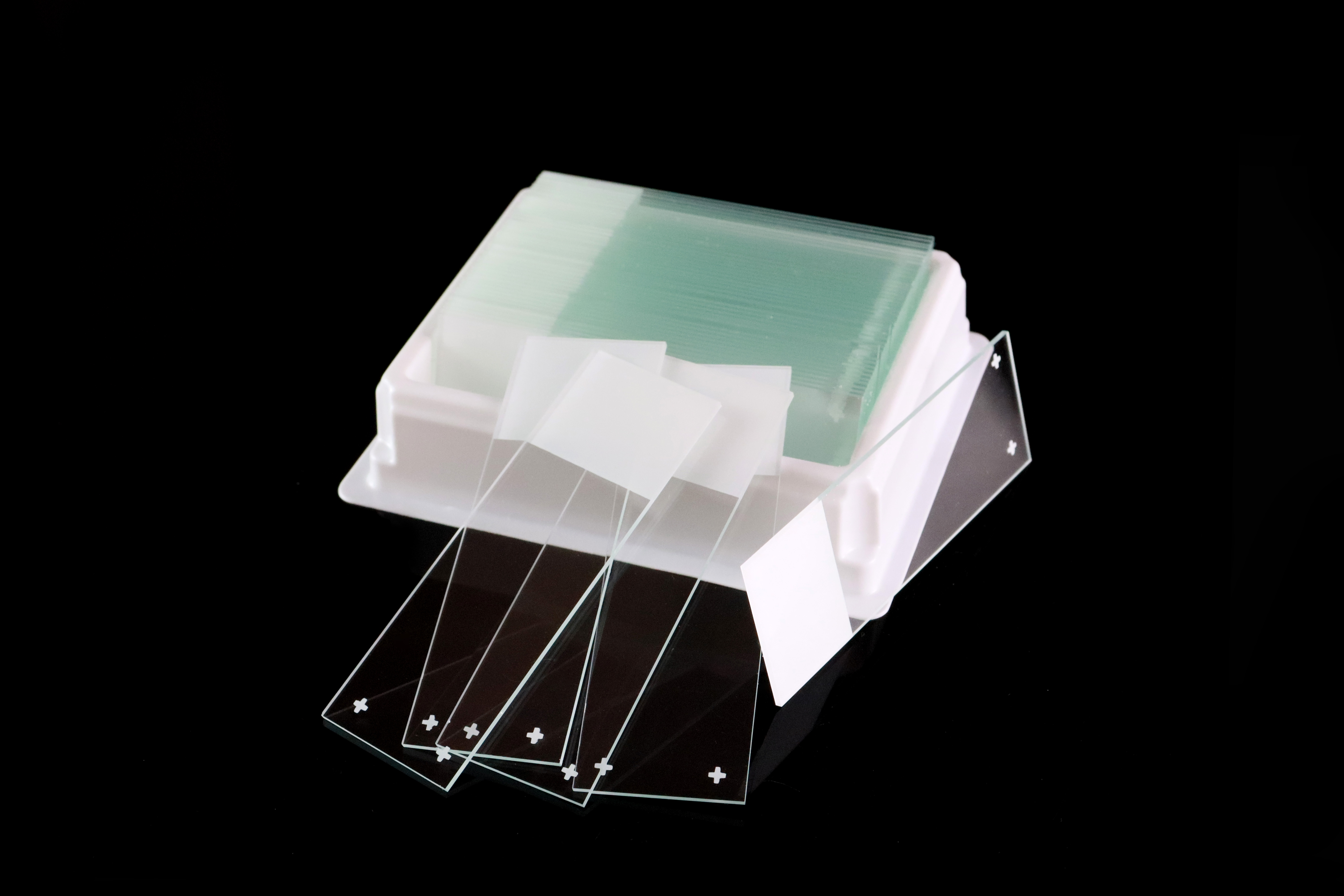 Positive Charged vs Plain Microscope Slides: What’s the Difference?Choosing between positive charged and plain microscope slides depends largely on the specimen, staining procedure, and required level of tissue adhesion.Plain microscope slides are widely used for routine microscopy and general labor
-
 Learn how to choose a reliable microscope slide manufacturer for bulk and OEM orders. Compare glass specifications, coatings, quality checks, samples, packaging and delivery terms. Use a practical supplier checklist and RFQ template to assess offers and plan consistent repeat supply for your buyers.
