







Private Label Microscope Slides: Build a Product Range Customers Can Reorder
Private label microscope slides give laboratory distributors and importers a way to build their own product identity while sourcing from a manufacturing partner.
The opportunity extends beyond a branded box. A successful range connects customer needs, dependable product specifications, clear catalog information and accurate repeat supply.
This guide focuses on the practical work of launching and managing a private label slide range: choosing products, creating SKUs, approving packaging and keeping the customer experience consistent.
Quick Answer: What Are Private Label Microscope Slides?
Private label microscope slides are supplied by a manufacturer and marketed under the buyer's own brand. Depending on the agreed scope, branding may include packaging, labels, product codes, barcodes and carton markings.
A strong launch requires an approved product specification, representative samples, accurate artwork, a workable order quantity and a plan for replenishment.
Private Label and OEM: Agree on the Actual Scope
Private label programs often use an established product with customized branding. OEM projects may also involve changes to dimensions, surface treatment or other manufacturing requirements.
The terms overlap between suppliers. Rather than relying on the label alone, list what will change and what will remain an established specification.
For a brand launch, this helps define the quotation, sample process, development work and production schedule.
1. Begin with the Customers You Intend to Serve
Identify the users and applications before selecting packaging colors or a catalog name.
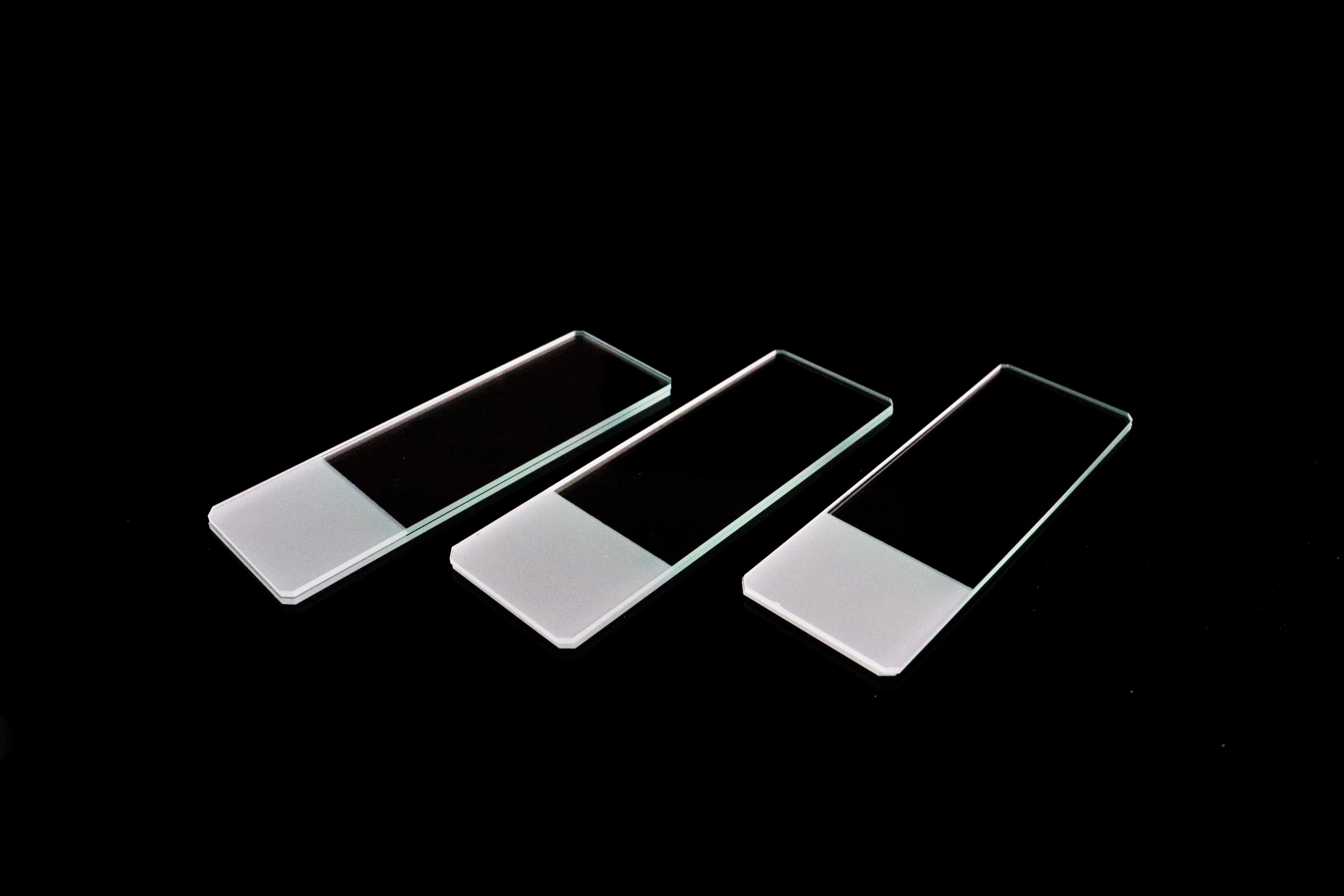
Teaching laboratories may prioritize routine slides and economical pack formats. Histology and pathology customers may need marking areas, printing performance or a specified adhesion treatment.
For an initial range, consider a focused selection:
Product Category | Customer Need to Confirm |
|---|---|
Routine observation and general specimen preparation | |
Specimen identification and writing requirements | |
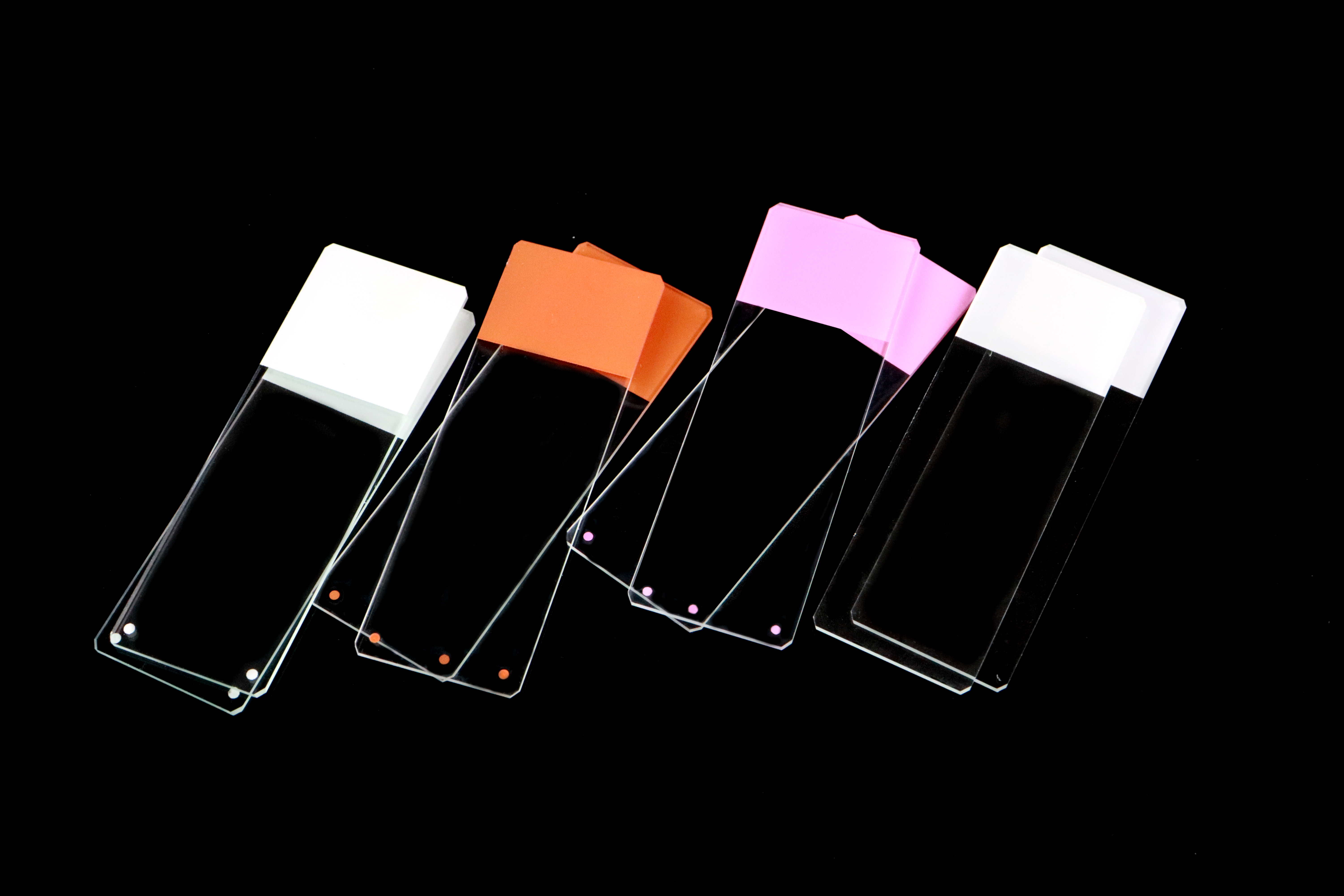
Color coding and marking or printing workflows | |
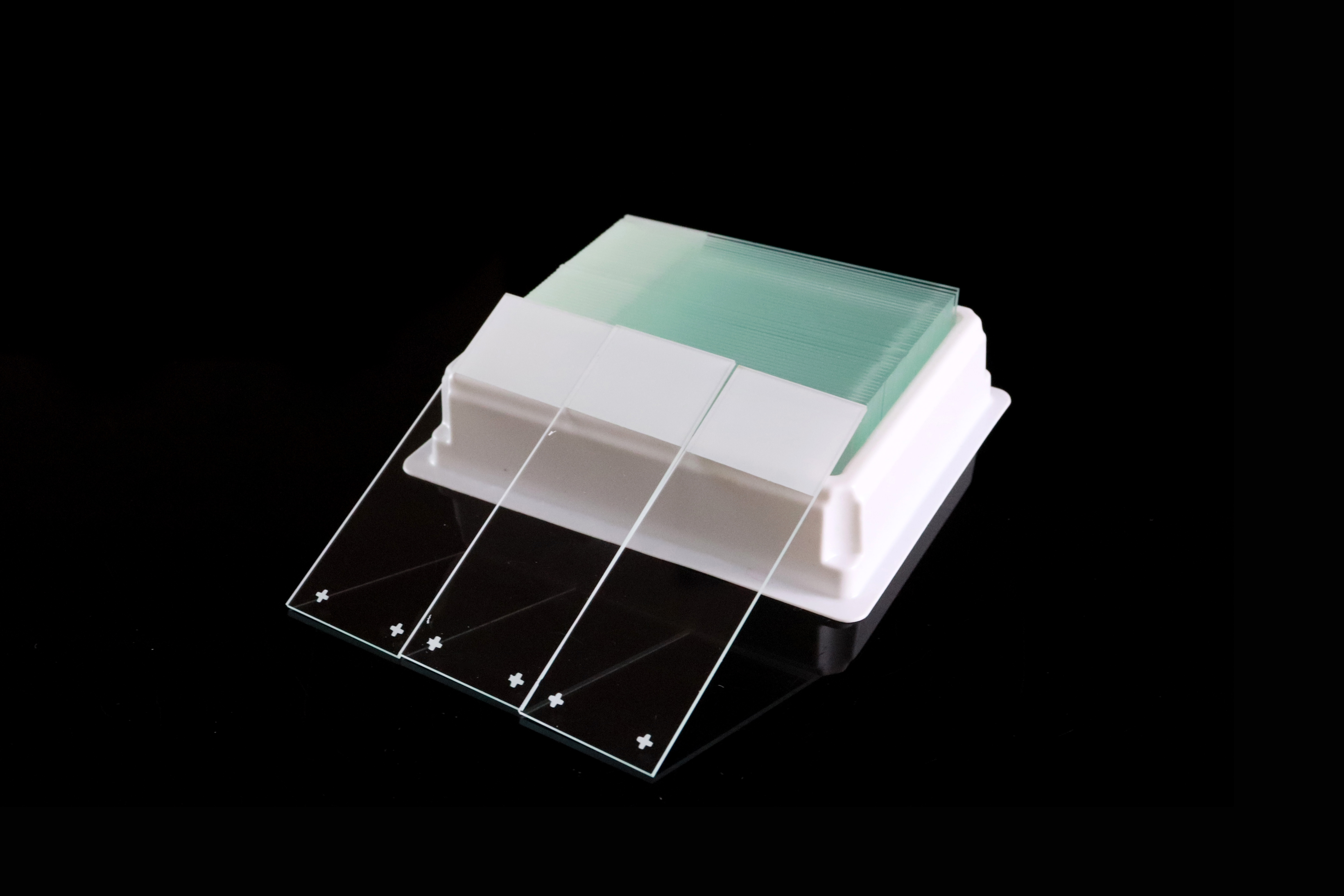
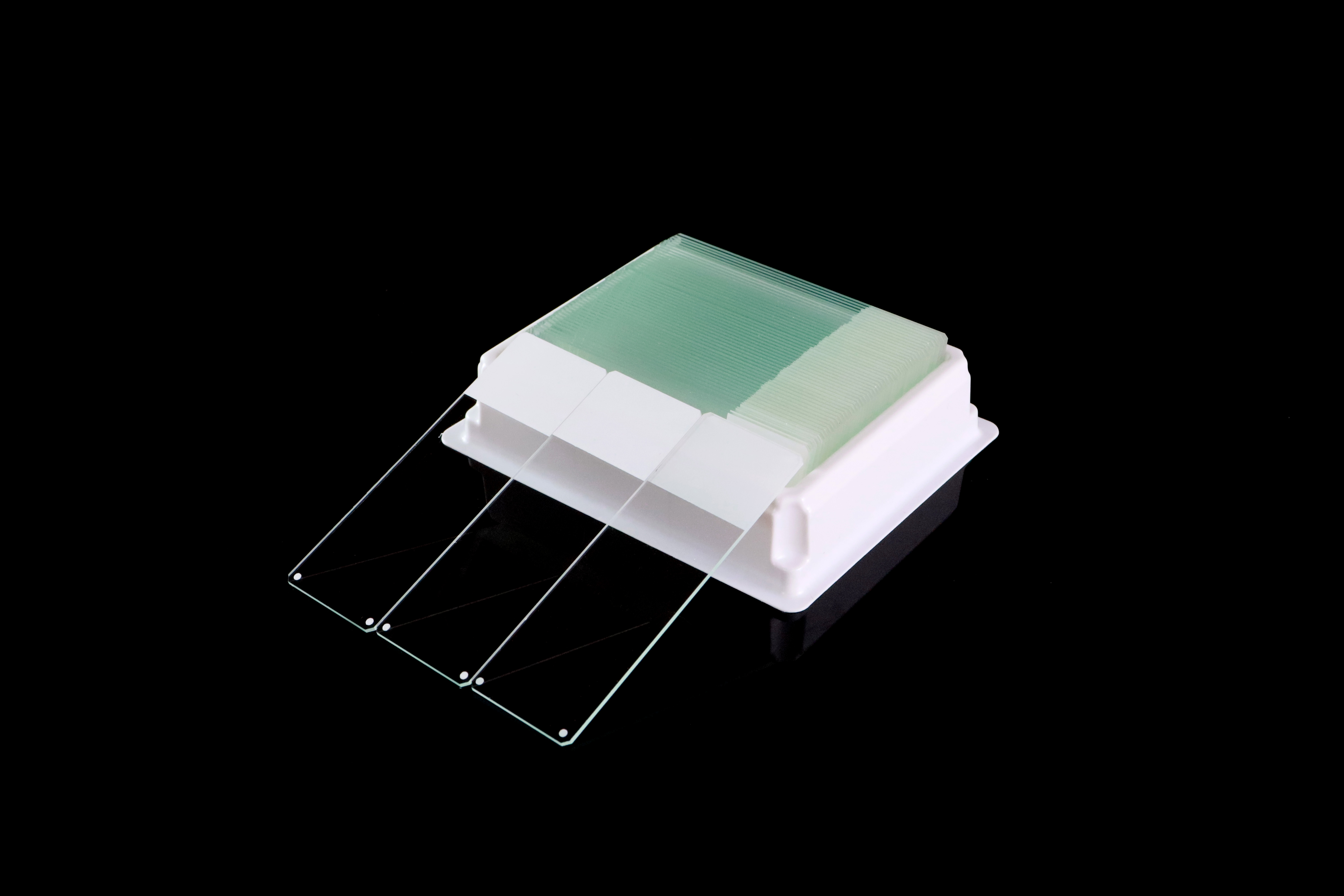
Enhanced adhesion for the intended laboratory procedure |
Use actual customer demand to decide which sizes, colors and pack formats justify separate stock items.

2. Build a Product Master Record for Every SKU
A SKU is an internal stock-keeping identifier. Give each sellable configuration a clear code and maintain one approved product record behind it.
Record the slide type, glass, dimensions, thickness, edge finish, marking area, surface treatment and pack quantity. Link that record to the supplier's manufacturing code so purchase orders and warehouse records refer to the same item.
The following codes are illustrative internal examples:
Example SKU | Product Description | Separate Record Needed When |
|---|---|---|
PL-101 | Plain slide, agreed metric size, ground edge | Size, edge or pack configuration changes |
FR-101 | Frosted slide, agreed marking area | Marking dimensions, sides or finish changes |
CF-W01 | Color frosted slide, approved white reference | Color or printing specification changes |
PC-101 | Positively charged slide, approved specification | Treatment, application specification or packing changes |
An internal SKU and a barcode serve different purposes. Verify the barcode data and identification system separately.
3. Design Packaging Around Identification and Accuracy
A recognizable product family should still make individual items easy to distinguish.
Agree on the brand artwork, product names, specifications, pack quantities, product codes, barcode data, batch information and carton labels. Keep the same information consistent across the box, quotation, catalog and online listing.
Confirm where customization will appear. A logo on the outer box does not establish that the slide itself will be printed.
Review the full packaging configuration, including inner packs and shipping cartons. The design needs to support both brand presentation and protection of fragile glass.
4. Approve Product and Packaging Samples Before Launch
Evaluate representative slides before placing them in a branded range.
Check dimensions, thickness, flatness, cleanliness, optical appearance, chips, cracks and edge finishing. Where relevant, assess writing, printing and the specimen-surface treatment under the intended conditions of use.
Packaging approval should cover both the visible artwork and the information it communicates. Check that the correct product is associated with the correct label, code and quantity.
Retain the approved sample, written specification and artwork version as the launch references. If a physical printed proof is unavailable at a particular stage, agree on the approval method with the manufacturer.
5. Ask Separately About Product and Packaging MOQ
A supplier may have different minimum quantities for slide production, printed boxes, labels and individual color variants.
Confirm MOQ for each product and packaging design. Also ask how unused printed packaging will be handled if the packaging run exceeds the first slide order.
Where packaging is held for future orders, agree on ownership, identification, storage and what happens after an artwork revision. This helps prevent obsolete boxes from appearing in later shipments.
Share a realistic initial quantity and demand forecast before choosing the launch configuration.
6. Prepare the Product Information Your Sales Team Needs
A branded product should be supported by clear information that customers and staff can use.
Prepare a consistent product description covering:
Slide type and intended application
Glass and dimensional specification
Edges, marking area and surface treatment
Pack quantity and ordering code
Relevant storage or handling instructions
Sample evaluation and technical contact arrangements
Use product-specific evidence for application or equipment claims. A broad description such as “charged slide” is insufficient to establish compatibility with every staining method.
Keep sales descriptions aligned with the approved specification as the range develops.
7. Check Quality at Both the Product and Packaging Level
Quality checks should confirm that the slides meet the agreed physical and functional requirements.
Packaging checks should verify the correct artwork, product code, specifications, quantity, barcode and batch identification. A well-made slide can still create a customer problem if it is placed in a box describing a different item.
Ask the supplier how production batches are identified and how a concern can be traced from the branded pack back to the relevant manufacturing records.
Review incoming shipments using a consistent inspection process rather than relying on the appearance of a single sample.
8. Plan Replenishment Before the First Launch
A private label range needs a workable repeat-order process.
Confirm manufacturing lead time, packaging availability, approval requirements and expected dispatch arrangements. Use demand information to plan reorders, taking account of the specific product's storage life where relevant.
Calculate the complete purchasing cost: product, printing, packaging, freight, relevant import costs and inventory. Compare suppliers using equivalent specifications and delivery terms.
For repeat orders, use the approved product code and document version. Require discussion and approval of proposed changes to the slide, treatment, marking color or packaging.
Private Label Launch Checklist
Area | Approval Question |
|---|---|
Customers | Is each product linked to a clear user requirement? |
Range | Are the initial sizes, colors and formats manageable? |
Product records | Does each SKU have an agreed specification and supplier reference? |
Samples | Have physical quality and relevant application performance been evaluated? |
Packaging | Are artwork, descriptions, quantities and codes accurate? |
MOQ | Are slide and packaging minimums understood separately? |
Sales information | Do catalogs and listings match the approved product? |
Traceability | Can a branded pack be linked to a manufacturing batch? |
Replenishment | Are reorder references, lead times and change approvals defined? |
Private Label Support from Chuangxin Medlab
Yancheng Chuangxin Medlab Co., Ltd. manufactures and supplies microscope slides for international distributors, importers and laboratory supply brands.
We support discussions on product selection, representative samples, packaging, labeling and repeat-order requirements. Available slide categories include plain, frosted, color frosted and positively charged products, according to the selected specification.
Our aim is to help private label customers maintain a recognizable range supported by consistent product information, protective packaging and dependable repeat supply.
Frequently Asked Questions
Can I launch a private label range with only a few products?
A focused range can be practical when it matches customer demand. Confirm the order requirements for each model, color and packaging design before committing.
Is my internal SKU the same as a barcode?
An internal SKU identifies the item in your own records. Barcode data and format should be agreed and checked separately for the intended distribution system.
Can I keep the same packaging while changing the slide inside?
Any change should be reviewed against the approved specification and packaging description. Update product records and artwork where necessary so customers receive the item described.
What should I approve before the first production order?
Approve the product specification, representative samples, artwork, pack configuration, ordering codes, quantities, inspection arrangements and delivery schedule.
Plan Your Private Label Slide Range
A strong private label program makes products easy to identify, evaluate, order and reorder.
Contact Chuangxin Medlab with your target customers, proposed product range, quantities and packaging ideas to discuss the next steps.

Related Articles
-
 Compare 10 microscope slide manufacturers worldwide in 2026, including Chuangxin Medlab. Explore plain, frosted, charged, and adhesive slides. Review model specifications, printer compatibility, pack quantities, OEM options, and sample checks to choose a manufacturer for your laboratory or business.
-
 Compare 7 microscope slide manufacturers and suppliers for Malaysia in 2026, including Chuangxin Medlab. Review local buying channels, plain and adhesive slides, dimensions, box quantities, OEM options and sample checks. Learn how to compare quotations and plan delivery to your Malaysian laboratory.
-
 Compare 5 microscope slide manufacturers and suppliers for Turkey in 2026, including Chuangxin Medlab. Review local purchasing channels, plain and adhesive slides, product specifications, box quantities and OEM options. Use the buying checklist to request samples and compare quotes for your own lab.
- Compare six microscope slide manufacturers and suppliers for Colombia, including local purchasing channels and Chuangxin Medlab. Explore product references, slide sizes, packaging, surface options and sample checks to prepare clear quotations for routine microscopy, pathology and OEM supply in 2026.
