


About This Microscope Slide Manufacturer Guide
This guide is intended for laboratories, importers, distributors and OEM buyers comparing microscope slide manufacturers and brands for laboratory use, bulk purchasing and private-label projects.
The companies featured were selected based on publicly available product information, the scope of their microscope slide ranges and their relevance to different laboratory applications and purchasing requirements. The numbers indicate the order of presentation.
This article is published by Chuangxin Medlab and includes Yancheng Chuangxin Medlab Co., Ltd. among the companies discussed.
1. Leica Biosystems — Microscope Slides Specified for BOND Workflows
Business focus: Pathology systems and consumables.

Leica Biosystems lists BOND Plus slides as positively charged glass slides designed for its BOND system. The product includes placement margins associated with the system’s 100 µL and 150 µL dispensing modes.
This is a useful starting point for laboratories that need to maintain a defined relationship between the slide, tissue placement, and staining platform.
Who should compare Leica Biosystems? Pathology laboratories purchasing slides for an existing BOND workflow or reviewing the manufacturer’s specified consumables.
Before ordering, confirm the current product reference, instructions, packing, and regional supply route. If proposing another slide, assess it through the laboratory’s established validation process; a generic charged-slide description does not establish equivalent performance on that system.
2. Epredia — Manufacturer of Superfrost and Superfrost PLUS Slides
Business focus: Microscope slide manufacturing and pathology products.

Epredia identifies itself as a manufacturer of Superfrost and Superfrost PLUS slides and publishes a broader glass product portfolio. Its slide page distinguishes general marking surfaces, adhesion products, and printer-oriented variants.
The distinction between SlideMate PLUS and SlideMate Laser PLUS is particularly useful for procurement. Epredia describes the former for thermal transfer printing and the latter for infrared YAG laser printing. Both are presented with the adhesion technology used in Superfrost PLUS.
Who should compare Epredia? Histology laboratories evaluating an established adhesion-slide family or a marking surface specified for a particular printing technology.
Request the exact regional reference and current datasheet. Keep the product family, marking technology, surface treatment, and manufacturer identity together in the purchasing record. A similar product name is insufficient when changing an approved slide.
3. Matsunami Glass — TOMO Adhesion Slides for Defined Laboratory Workflows
Business focus: Clinical glass and microscopy products; Japan.

Matsunami Glass publishes a detailed table for its TOMO adhesion slides. For example, TOM-11 is a white slide measuring 75 × 25 mm, with a thickness range of 0.9–1.2 mm, a 20 × 25 mm frosted area, and 100 slides per box.
The table also distinguishes clipped-corner models from TOM-1190, which is listed with 90-degree corners. Matsunami describes the TOMO coating as hydrophilic and identifies thermal printer and automated IHC applications.
Who should compare Matsunami? Laboratories evaluating an adhesion surface and a documented physical format for a specified processing or printing workflow.
Choose the individual TOMO reference before requesting samples. Compare corner clearance, labeling, specimen retention, and staining results using the laboratory’s own procedures. Specifications for TOM-11 should not be applied automatically to every Matsunami slide.
4. Paul Marienfeld — Documented HistoBond Slide Dimensions and Surface Features
Business focus: Laboratory glassware and specialist microscope slides.

Paul Marienfeld’s HistoBond product page specifies approximately 76 × 26 mm slides with a nominal thickness of 1 mm and a stated thickness tolerance of ±0.05 mm. It describes positively charged surfaces on both sides and a frosted marking area of approximately 20 mm on both sides.
The page separates 90-degree ground-edge versions from versions with additional 45-degree chamfered corners. It also identifies different ordering references for cardboard and plastic box configurations.
Who should compare Marienfeld? Buyers documenting dimensional requirements, surface features, and packaging against an exact catalog number.
Specify which HistoBond reference you intend to purchase. Related names such as HistoBond+, HistoBond+S, and other variants should be checked against their own documentation rather than treated as interchangeable products.
5. KNITTEL Glass — StarFrost Marking Areas and Customized Slide Formats
Business focus: Microscope slides, cover glass, and diagnostic glass products; Germany.

KNITTEL Glass, a StatLab company, manufactures slide and cover glass products. Its StarFrost range features printed marking areas and several edge configurations. The manufacturer also describes customized printing for larger requirements.
KNITTEL’s catalog distinguishes StarFrost marking-area products from adhesive and other selectively coated diagnostic slides. That distinction helps buyers specify identification and specimen adhesion as separate requirements.
Who should compare KNITTEL? Laboratories and distributors reviewing marking-field design, surface treatment, edge configuration, or customized diagnostic layouts.
Ask for the exact glass dimensions, printed area, coating, edge finish, and corner shape. If customization is required, agree on the drawing and marking requirements before sample approval. Evaluate the selected reference with the intended printer and handling equipment.
6. Yancheng Chuangxin Medlab Co., Ltd. — Bulk Microscope Slides and OEM Inquiries
Business focus: Microscope slides, cover glass, and laboratory consumables; China.

Yancheng Chuangxin Medlab Co., Ltd., operating under the S.D.T.C. brand, provides several slide categories in its microscope slide range:
7101 / 7102 plain slides for routine preparation and observation.
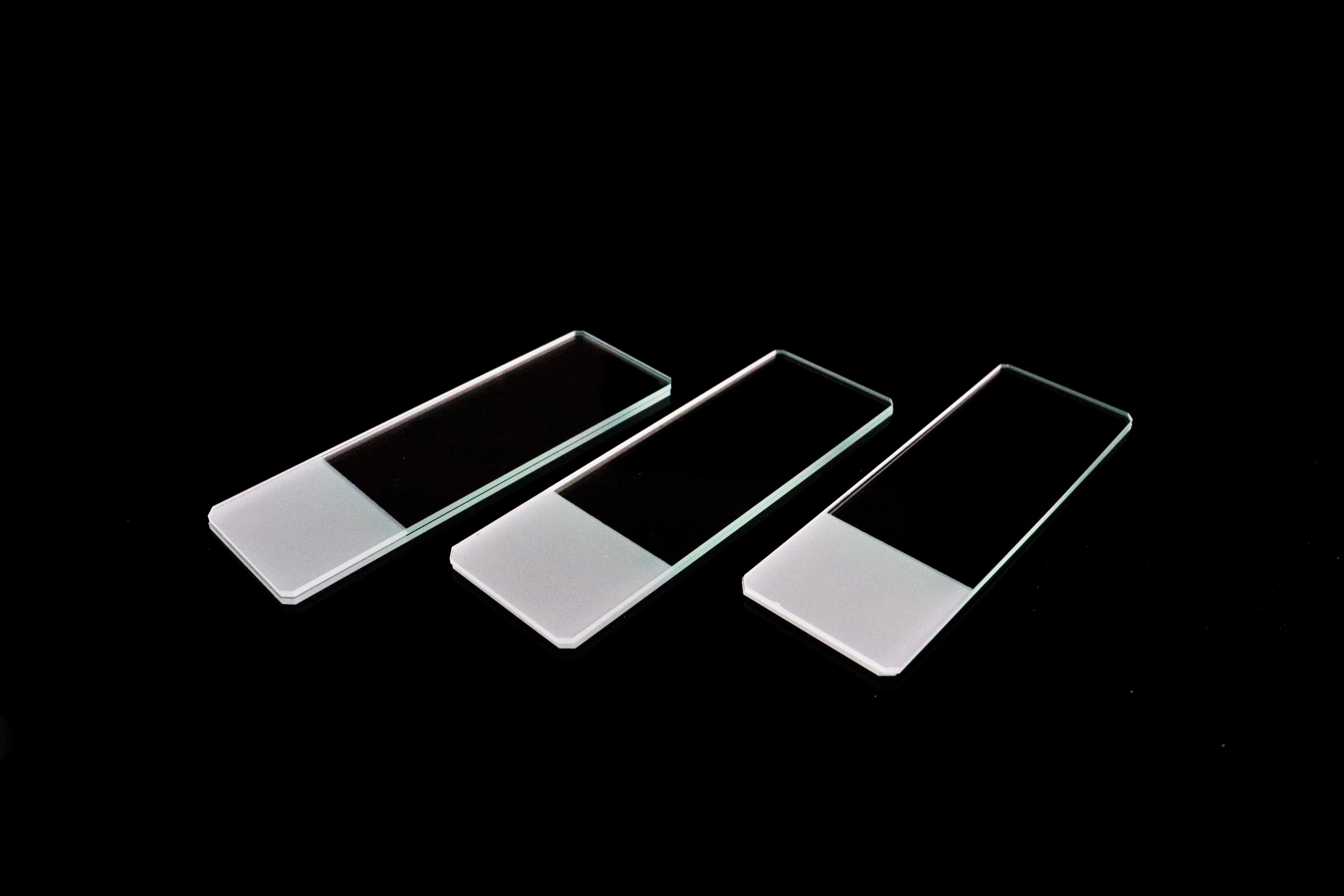
7105 / 7107 frosted slides for sample identification and writing.
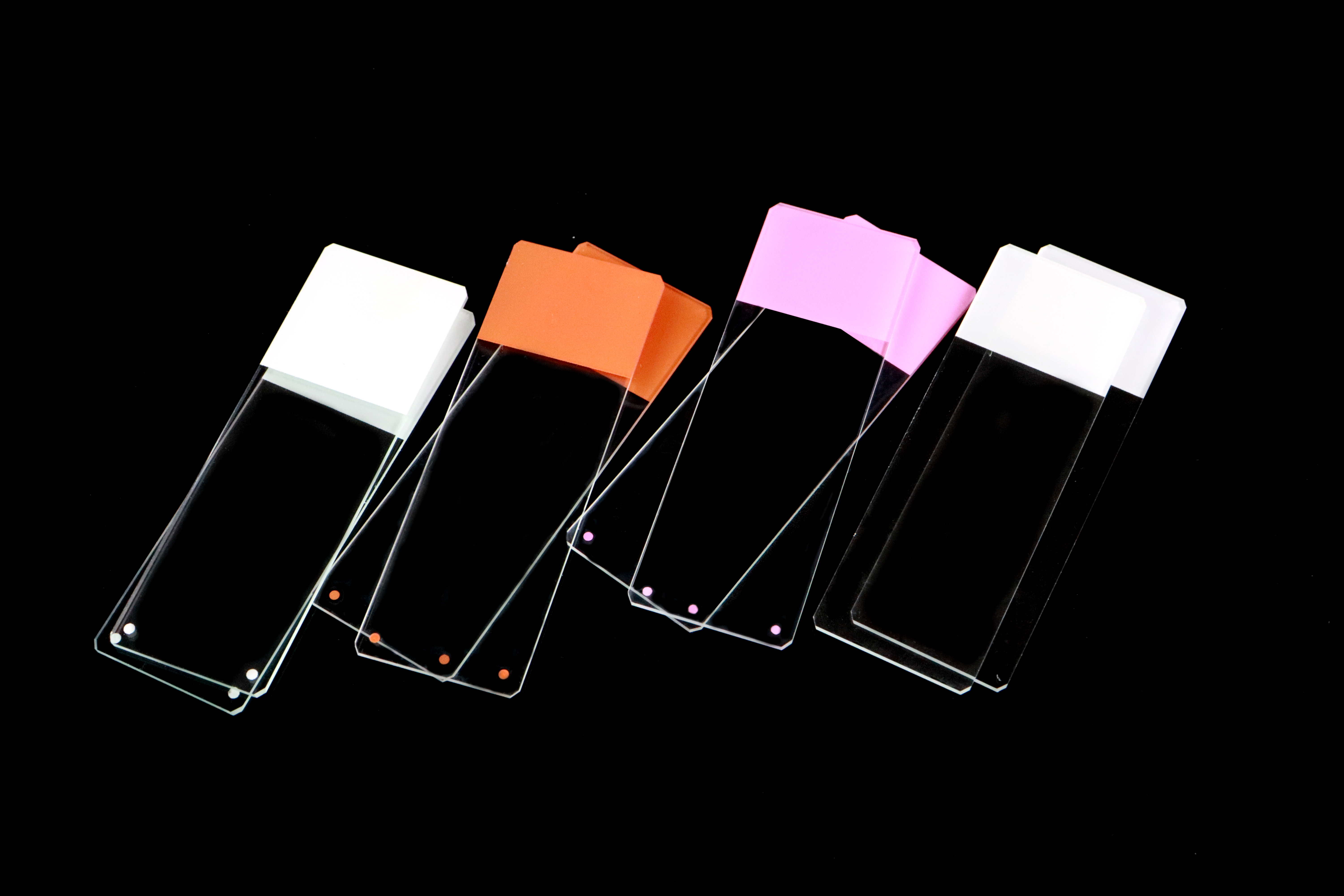
7109 color-frosted slides for color-based identification.
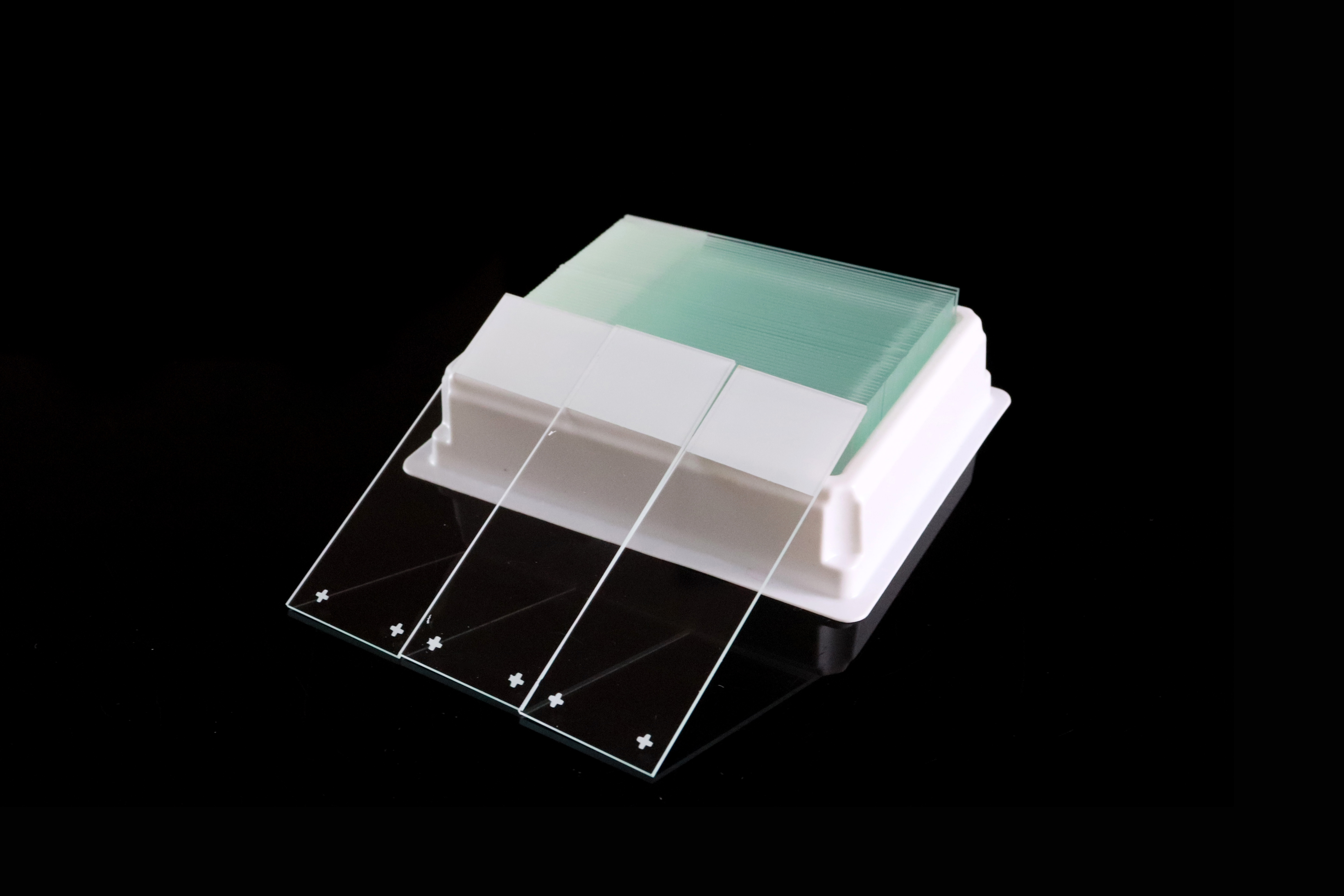
SC1 positively charged slides for specified adhesion requirements.
SC2 adhesive slides for applications requiring enhanced specimen retention.
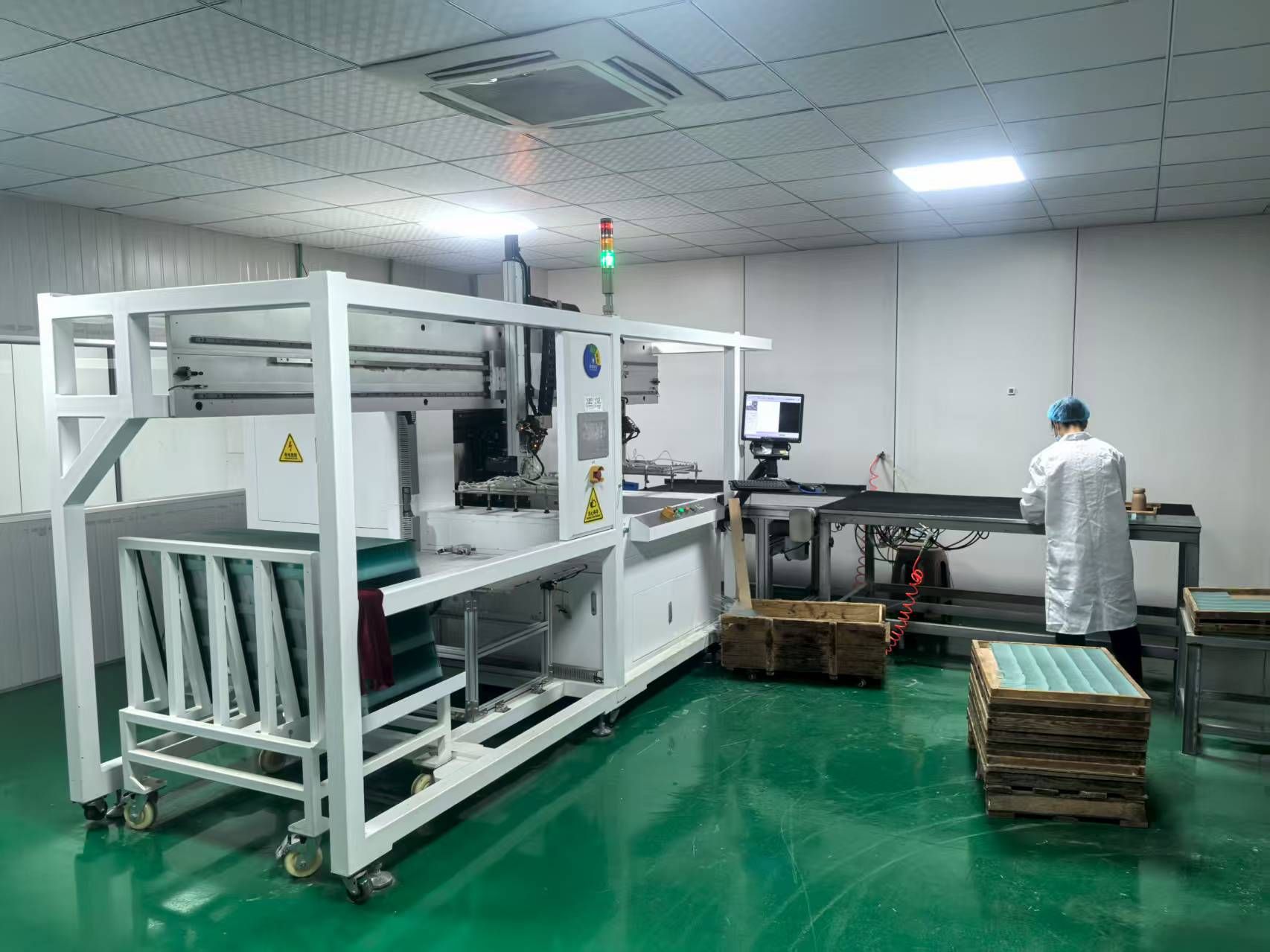





Published dimensions include 25 × 75 mm, 25.4 × 76.2 mm, and 26 × 76 mm, with cut-edge and ground-edge options. The company also describes customization of slide dimensions, marking areas, labels, boxes, and packaging.
Who should compare Chuangxin Medlab? Importers, distributors, laboratories, and private-label buyers seeking a defined factory specification for repeat orders.
Submit the application, dimensions, surface treatment, packaging, quantity, and destination. Request the proposed model, samples, current minimum order, production lead time, and shipping terms. For OEM projects, approve the specification and artwork before confirming production.
Explore Plain Microscope Slides, Frosted-end Microscope Slides, Positively Charged Slides, and Adhesive slides.
Contact Yancheng Chuangxin Medlab Co.,Ltd.
7. Bio-Optica Milano — Manufacturer-Identified Slides with Detailed Packing Data
Business focus: Pathology products and microscope slides; Italy.

Bio-Optica’s microscope slide datasheet explicitly names Bio-Optica Milano S.p.A. as the manufacturer. The document lists frosted and color-marked references, including the white-marked 09-1030.
For the specified family, published dimensions are 25.5 × 75.5 mm with a stated ±0.5 mm tolerance, and thickness is 1–1.1 mm. The datasheet separates edge finish from corner geometry and lists 2,500-piece quantities comprising 50 boxes of 50 slides.
Who should compare Bio-Optica? Buyers who need to connect a slide code with manufacturer identity, dimensions, and a documented packing configuration.
Use the selected reference’s current datasheet when checking marking and printing requirements. The dimensions and packaging above apply to this family; other Bio-Optica slide lines may use different configurations.
8. Diapath — DiaPrint Slides for Thermal Transfer and Inkjet Evaluation
Business focus: Histology and cytology instruments, reagents, and consumables; Italy.

Diapath identifies itself as a manufacturer and distributor of pathology products and a member of the StatLab group. Its DiaPrint GP09033 listing specifies 26 × 76 mm slides, 45-degree beveled edges, a white marking area, and a published packaging quantity of 2,000 pieces.
The product description identifies both thermal transfer and inkjet printing applications. This provides a specific starting point for buyers comparing marking surfaces and instrument feeding requirements.
Who should compare Diapath? Histology laboratories evaluating a slide reference intended for automated identification and subsequent laboratory processing.
Request the current instructions and confirm the approved printer models, inner-box quantity, coating, and commercial pack. The web listing’s 2,000-piece quantity should not be interpreted as a single small slide box.
9. Corning — Plain Glass Slides with Defined Catalog and Case Quantities
Business focus: Materials science and life-science laboratory products.

Corning’s life-science catalog lists plain microscope slides made from soda-lime glass, with a published thickness range of 0.9–1.10 mm. The 2947-75X25 reference identifies a 75 × 25 mm slide.
The catalog uses gross-based packaging terminology. Half a gross is 72 slides; the listed 10-gross case corresponds to 1,440 slides. This is useful when translating an existing laboratory order into an exact product and case quantity.
Who should compare Corning? Laboratories procuring routine plain glass slides through a defined laboratory products catalog.
Confirm the current reference, box and case quantities, edge configuration, and supply conditions. A plain slide should be assessed against the intended specimen preparation; it should not be assumed to provide the adhesion properties of a coated histology slide.
10. MUTO Pure Chemicals — Routine and Instrument-Specific Slide Glass
Business focus: Clinical laboratory products and microscope glass; Japan.

MUTO Pure Chemicals publishes regular slide references at 76 × 26 mm in both 1.0 mm and 1.3 mm thicknesses, with different cleaning, frosting, and edge configurations. The company describes ultrasonic cleaning, inspection, and packing processes for its slide glass.
Its broader slide portfolio includes SM5116, BM5116, and slide formats for the PPM-SX and PPM-NX printers. The published descriptions distinguish these instrument-oriented products from regular slides.
Who should compare MUTO? Laboratories matching a routine slide configuration, a hematology requirement, or a named instrument’s loading format.
Record the full reference and thickness before requesting a quotation. A 1.3 mm slide should not be substituted for a 1.0 mm product without checking the relevant holder, printer, and downstream equipment requirements.
Which Microscope Slide Type Fits Your Application?
Requirement | Slide type to evaluate | Information to confirm |
|---|---|---|
Routine observation or teaching with self-prepared specimens | Plain blank glass slides | Size, thickness, cleanliness, edges, and quantity |
Handwritten specimen identification | Frosted-end slides | Marking area, usable side, and writing performance |
Department or specimen color coding | Color-frosted slides | Color, marking method, and label durability |
A histology procedure requiring specimen retention | Charged or adhesive slides | Exact coating, intended use, staining background, and retention |
Automated slide identification | A printer-specified slide reference | Printing technology, marking field, feeding, and barcode readability |
Existing teaching specimens | Prepared specimen slides | Specimen list and teaching purpose |
Blank slides, prepared specimen slides, chamber slides, and coverslips are different products. Include the intended product category in the inquiry so quotations address the same requirement.

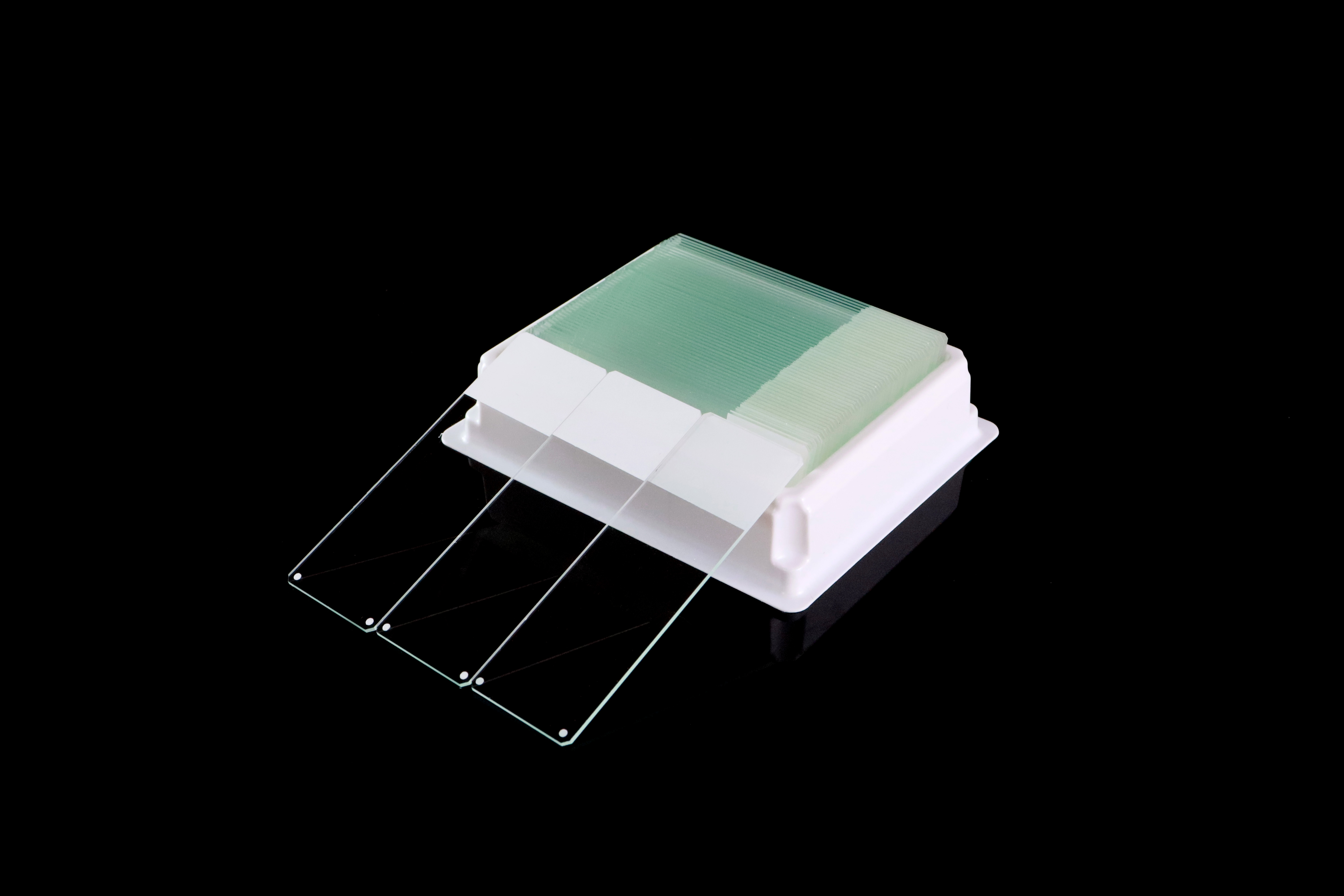
How to Compare Microscope Slide Specifications Across Manufacturers
Match Dimensions and Tolerances to the Equipment
This comparison includes published formats such as 75 × 25 mm, 76 × 26 mm, and 75.5 × 25.5 mm. Those dimensions should be checked against the relevant instrument documentation rather than treated as identical.
Specify length, width, thickness, and acceptable tolerances. For a change of supplier, connect the proposed reference to the actual printer, stainner, cover slipper, scanner, or slide holder used by the laboratory.
Specify the Marking Area and Specimen Surface Separately
A colored marking area identifies the sample. A charged or adhesive specimen-bearing surface addresses retention. A slide may combine both features, so requesting only a color does not fully define a coated slide.
Ask which surfaces are treated, the marking area’s dimensions, and the permitted writing or printing method. Record the exact coating designation rather than relying on a general description such as premium or adhesion slide.
Separate Edge Finish from Corner Geometry
Cut or ground edges and square or clipped corners describe different features. When a product uses 45-degree or 90-degree terminology, obtain the manufacturer’s drawing or description showing what the angle refers to.
Include both fields in the purchase specification. This prevents an apparently similar slide from being substituted with a different physical configuration.
Identify the Printing Technology
Thermal transfer, inkjet, and laser marking place different demands on the marking field. A printable slide description should be supported by the selected model’s documentation and an evaluation with the intended printer.
Check feeding, print definition, bar code reading, marking durability during processing, and downstream handling. Keep the approved printer settings and slide reference in the purchasing record.
What Quality Evidence Should Buyers Request?
Ask for evidence relevant to the offered model and the laboratory’s requirements:
A current datasheet identifying the product and responsible manufacturer.
An agreed physical and surface specification.
Product and lot identification on the proposed packaging.
Relevant quality-system documents and their scope, where required by procurement.
Storage instructions and shelf-life information where applicable.
A documented process for reporting defects, substitutions, or specification changes.
A company certificate alone does not demonstrate that every slide fits a particular instrument or staining procedure. Connect the documentation to the exact product being evaluated.
For a broader purchasing checklist, see Microscope Slides Quality Control: What Buyers Should Know.
How to Evaluate Samples Before a Bulk Order
Use a written evaluation plan appropriate to the slide and your laboratory:
Confirm identity: Record manufacturer, product code, lot, surface, and packing.
Review physical condition: Check dimensions, glass condition, cleanliness, and packaging against the agreed acceptance criteria.
Assess identification: Evaluate the intended writing or printing method and barcode reading where applicable.
Assess the intended workflow: Have the laboratory evaluate specimen retention, staining, and equipment handling using its established procedures.
Approve the purchasing specification: Retain the accepted reference, results, and packaging details for repeat orders.
Where feasible, compare samples from more than one lot to assess consistency. Distinguish documented observations from assumptions based on brand reputation.
How to Compare Packaging and Total Purchasing Cost
Published packaging in this comparison includes selected 50-piece, 72-piece, and 100-piece boxes. Different counts can substantially change the quantity represented by the same number of boxes.
Slides per box | Slides in 100 boxes | Boxes needed for at least 10,000 slides |
|---|---|---|
50 | 5,000 | 200 boxes = 10,000 slides |
72 | 7,200 | 139 boxes = 10,008 slides |
100 | 10,000 | 100 boxes = 10,000 slides |
These calculations illustrate quantity comparison; they do not establish any manufacturer’s minimum order or commercial case arrangement.
Compare the cost for the same accepted slide specification and total required quantity. Include quoted freight, packing, and handling, and assess observed breakage or rework where relevant. Keep box quantities separate from case, carton, and pallet quantities.
What Should OEM and Private-Label Buyers Confirm?
OEM procurement needs an agreed product specification in addition to a logo on the box. Define the slide, surface treatment, marking area, edge and corner configuration, packing, and traceability requirements before approving artwork.
For a private-label project, request:
Confirmation of the proposed manufacturer and product code.
Available customization and current minimum order requirements.
Sample and artwork approval steps.
Packaging materials, box counts, and transport protection.
Label content, batch identification, and any required documentation.
Production lead time, change-notification arrangements, and repeat-order terms.
Do not assume that every company on the list accepts OEM orders. Obtain project-specific terms directly from the manufacturer or its authorized commercial contact.
Microscope Slide RFQ Template for International Buyers
Send the same request for quotation to each shortlisted company:
Please quote [quantity] blank microscope slides for [application], measuring [length × width × thickness] mm with [tolerances], [edge finish], [corner geometry], and [marking area or coating]. Required packing is [slides per box] and [boxes per carton]. Please identify the manufacturer and exact product code, and provide the current datasheet, sample availability, minimum order, stock or production lead time, storage information, protective packing, shipping terms, quotation validity, and total quoted cost to [destination]. Our relevant instrument is [make and model]. OEM requirements, if applicable: [branding and artwork details].
For purchase planning beyond the initial quotation, see How to Buy Microscope Slides in Bulk.
Frequently Asked Questions
Which Is the Best Microscope Slide Manufacturer?
Choose the manufacturer offering a documented model that meets the laboratory’s application, instrument requirements, sample evaluation, and purchasing conditions. Brand size or position in a list does not establish suitability for every workflow.
Who Manufactures Superfrost PLUS Microscope Slides?
Epredia identifies itself as the manufacturer of Superfrost and Superfrost PLUS products. When purchasing through a distributor or another catalog brand, verify the offered product code and manufacturer documentation.
Is Fisher Scientific the Manufacturer of Every Slide in Its Catalog?
Fisher Scientific lists Fisherbrand products and products from other brands. A purchasing channel and the manufacturer of a specific slide are separate fields. Check the selected product’s label and documentation to establish the responsible manufacturer.
Are Frosted Slides the Same as Charged Slides?
Frosting usually describes a marking area, while a charged surface addresses specimen adhesion. A slide can have both. Specify the identification area and the specimen-bearing surface separately.
Are All Standard Microscope Slides the Same Size?
Published nominal sizes and thicknesses vary by manufacturer and reference. Confirm the exact dimensions and tolerances against the intended equipment. A standard slide description alone does not demonstrate interchangeability.
Can Any Microscope Slide Be Used with a Slide Printer?
The slide must match the printer’s physical and marking requirements. Confirm the exact slide reference and printing technology, then evaluate feeding, print durability, and bar code readability where relevant.
Can Chuangxin Medlab Supply OEM Microscope Slides?
Chuangxin Medlab publishes OEM and private-label options. Submit the required specification, quantity, packaging, artwork requirements, and destination to request current project terms and sample availability.
Request a Microscope Slide Specification and Quotation
Start with the application and exact model requirements, then compare documentation, evaluation samples, packing, and commercial terms. This creates a more useful purchasing decision than selecting a company solely from a general manufacturer ranking.
To discuss bulk or OEM supply, contact Yancheng Chuangxin Medlab Co., Ltd. with your slide dimensions, surface treatment, marking requirements, order quantity, packaging, and delivery destination. Request a proposed model and samples for evaluation before confirming a repeat-order specification.